Switching From a Gas Combi to an Electric Boiler: What Are The Biggest Changes?

If you have lived with a gas combi for years, replacing it with an electric boiler can feel like a big unknown. In practice, a lot of it will feel familiar. Your radiators, your heating pipework and the basic idea of a boiler that heats your home and gives you hot water on demand all stay in place.
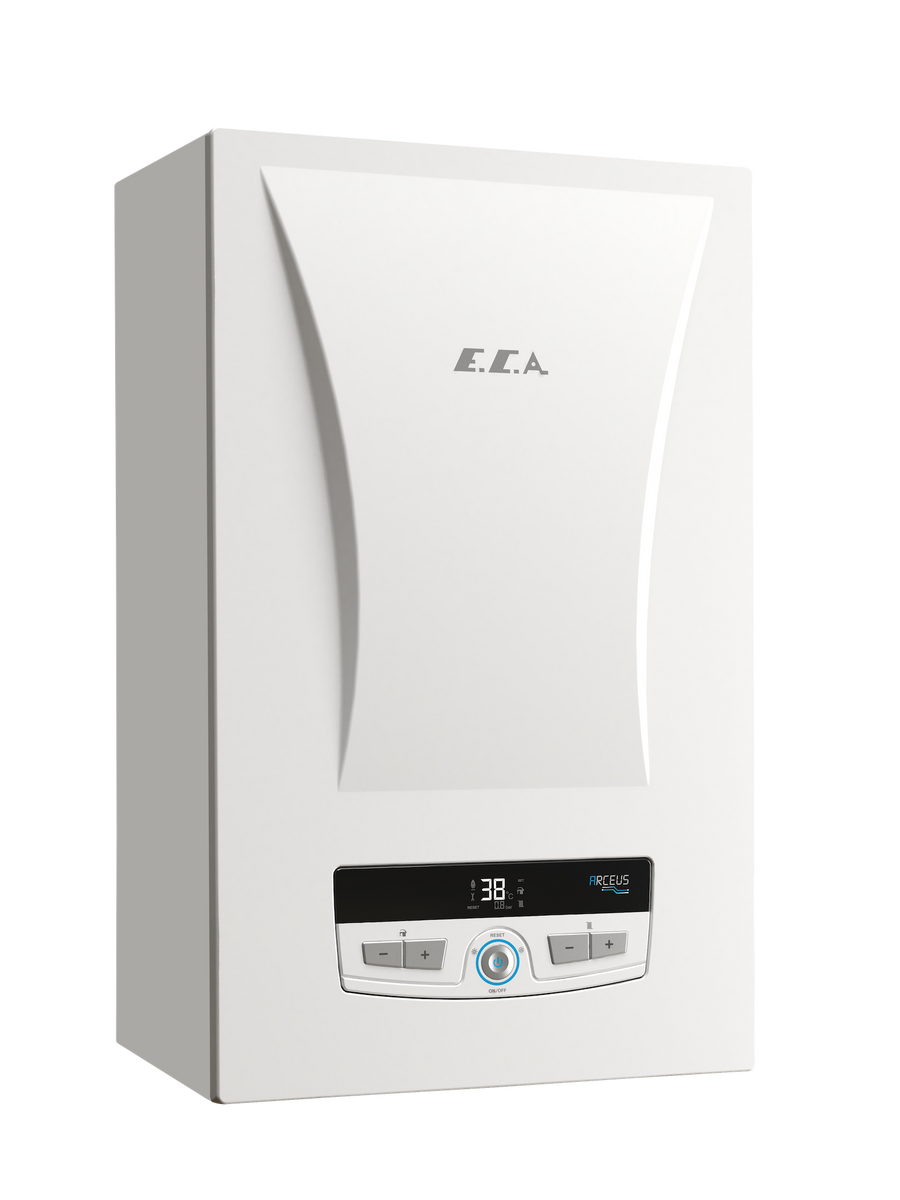
What changes is where the heat comes from - and that brings a different set of questions. Instead of worrying about gas pressure, flues and condensate pipes, the conversation moves to your electrical supply, correct sizing and realistic hot water expectations. This guide walks through the biggest changes, using our Arceus electric boiler as the worked example.
1. The water side stays familiar
An electric combination boiler like the Arceus MT keeps the water circuit components that heating engineers already know from gas combis:
- Circulation pump - moves water around your heating circuit.
- Expansion vessel - supports a sealed heating system. Arceus uses an 8 litre vessel, larger than the 5 litre vessels found in several comparable electric boilers.
- Motorised three-way valve - switches heat between your radiators and your hot water.
- Plate heat exchanger - transfers heat into your mains water to give instant hot water at the tap.
- Sensors and staged controls - manage temperature, demand and safety.
Because the hydraulic logic is recognisable, engineers tend to adapt quickly. The boiler also has built-in protection functions such as an automatic bypass, pump overrun, frost protection, pump and valve exercise cycles, an automatic air vent and an annual service reminder.
2. The combustion hardware disappears
This is the most obvious physical change. An electric boiler has:
- No gas valve or burner
- No fan or flue
- No combustion condensate trap or condensate pipe to freeze in winter
- No combustion gases produced at the boiler
Without a flue to route through an outside wall, you generally have more freedom over where the boiler goes, although it still needs suitable pipework connections, electrical supply and service access. It also tends to be quieter, with no fan or burner firing up.
3. Your electrical supply becomes the big question
This is the single most important change, and the one to check before you order anything. A gas combi draws very little electricity. An electric boiler draws a lot, so your supply has to be designed for it.
The Arceus 12 and 15 kW models can be connected to either a standard 230 V single-phase supply (most homes) or a 400 V three-phase supply. The manufacturer's published values are:
| Model | Supply | Nominal current | Supply cable | Minimum MCB |
|---|---|---|---|---|
| Arceus 12 | 230 V single-phase | 52 A | 3 x 10 mm² | B63 |
| Arceus 12 | 400 V three-phase | 17 A | 5 x 4 mm² | B20 |
| Arceus 15 | 230 V single-phase | 65 A | 3 x 16 mm² | B80 |
| Arceus 15 | 400 V three-phase | 21 A | 5 x 6 mm² | B25 |
What this means in practice:
- The boiler needs its own dedicated circuit - it cannot share with other loads.
- A 30 mA RCD is specified by the operating manual.
- Your electrician should check the maximum demand on your incoming supply, and whether your network operator (DNO) needs to be involved.
- The cable route, protection and design must meet BS 7671. On a single-phase supply, the 15 kW model needs a B80 minimum - a 63 A circuit should not be assumed.
These figures are an input to a competent electrical design, not a replacement for one. Get the supply confirmed first, then order the boiler.
4. Sizing works differently - bigger is not better
Gas combis are often sized with plenty of headroom. With an electric boiler, oversizing costs you in electrical capacity, so it pays to size properly.
Based on E.C.A. UK's experience across sales, technical support and aftercare, the 12 kW Arceus MT is the right starting point for most homes with one to three bedrooms and one bathroom, where the calculated heat loss is no more than 12 kW. The 15 kW model should only be chosen when a room-by-room heat loss calculation shows the heating load genuinely needs it.
Be wary of the old rule of thumb that every radiator equals 1.5 kW. A radiator's real output depends on its size, type and the water temperature your system runs at. For example, a Stelrad Elite 600 x 1000 mm Type 22 radiator is rated at 1,778 W at the standard test condition, but that drops to roughly 1,330 W or 916 W at lower operating temperatures. Radiator count is a useful first guide - around eight conventional radiators can support a 12 kW conversation, while nine or more is worth a closer look at 15 kW - but it never replaces a proper heat loss calculation.
5. Hot water: set realistic expectations
This is where most people notice the biggest day-to-day difference. Gas combis typically have a much higher output for hot water than an electric boiler, so flow rates are lower. An electric combi supplies one outlet at a time - it is not designed to run two showers, or a shower and a bath, together.
Manufacturers quote hot water flow at a stated temperature rise, which can make comparisons confusing. A 30°C rise is not a 30°C outlet: with mains water coming in at around 10°C, a 30°C rise gives you 40°C water - a comfortable shower temperature.
Normalised to that 40°C outlet, the Arceus figures work out at approximately:
- Arceus 12: around 5.7 litres per minute
- Arceus 15: around 7.2 litres per minute - the strongest flow in the set of comparable electric combis we reviewed
If you want hotter water, say 44°C, flow drops by about 12%. These are nominal calculated figures (the manual states a ±15% tolerance), and your actual experience depends on your incoming water temperature and pipework.
If your home has multiple bathrooms, or you need several taps running at once, a combi is not the right answer. The Arceus ST system boiler paired with a correctly sized unvented cylinder stores hot water ready for higher demand. There is also a CH heat-only version where hot water is handled separately.
6. Controls can be smarter than you might expect
Arceus modulates its output from 2 kW up to its set maximum, so it can match demand rather than simply switching fully on and off. It accepts:
- Simple on/off room thermostats and timers
- Modulating room controls, including OpenTherm-compatible controllers
- An outdoor weather sensor
With an OpenTherm controller, the thermostat communicates with the boiler digitally, supporting steadier temperatures and closer control. One word of caution: savings percentages quoted for smart controls on gas boilers should not be applied directly to electric boilers. The real benefit depends on your home, your radiators, your settings and how you use the heating.
7. Running costs depend on your tariff
An electric boiler converts almost all of the electricity it uses into heat in your home, with no flue losses. However, electricity usually costs more per unit than gas, so your running costs depend heavily on your tariff, how well insulated your home is and how you use your heating. It is worth reviewing your energy tariff when you switch, and making sure the boiler is sized correctly rather than oversized.
8. Who does the installation
Installing an electric boiler is not gas work. However, the job still involves:
- Gas disconnection or capping of the old supply - this must be done by a Gas Safe registered engineer.
- Electrical work to BS 7671 and Building Regulations by a competent electrician.
- Plumbing and commissioning by a competent heating engineer.
The Arceus MT comes with a valve and filling kit covering the CH flow and return valves, DHW inlet and outlet valves, a WRAS-approved filling loop and a manometer. Many other electric boilers leave these to be sourced separately, so this helps give you a clearer, more complete quote. Good system cleaning, water quality and filtration still form part of a proper installation.
9. Servicing changes shape, but it still matters
Without a burner and flue, there is no combustion analysis or flue check. But an electric boiler still needs an annual service - and the Arceus reminds you when it is due.
The main service focus moves to the heating elements and water quality. Arceus has a dedicated test mode to check each element individually, elements can be descaled and cleaned, and a single element can be replaced without removing the main tank. In hard water areas, including much of London and the South East, keeping on top of limescale is especially worthwhile.
10. Warranty and approvals
Arceus comes with 3 years of parts and labour cover on the appliance, plus 10 years of cover on the heating elements. Registration, annual servicing and the current written terms apply.
The Arceus MT combination boiler models are WRAS approved (approval number 2205321) and covered by a signed UK Declaration of Conformity.
Before you switch: a quick checklist
- Get a room-by-room heat loss calculation to choose between 12 kW and 15 kW.
- Have an electrician confirm your electrical supply, maximum demand and circuit design.
- Be honest about your hot water demand - one bathroom suits a combi, several bathrooms suit a system boiler and cylinder.
- Plan for water quality, system cleaning and filtration.
- Choose your controls - a basic thermostat works, OpenTherm gives you more.
- Arrange a Gas Safe engineer to cap off the old gas supply.
Frequently asked questions
Can I keep my existing radiators and pipework?
In many cases, yes. The heating circuit works in a familiar way. Your engineer should still check that the radiators can deliver the heat your rooms need at the system's design temperature, and clean the system properly before commissioning.
Will an electric combi give me the same shower as my gas combi?
Usually the flow will be lower, because a gas combi has much more output available for hot water. At around 40°C, expect roughly 5.7 litres per minute from the Arceus 12 and 7.2 litres per minute from the Arceus 15, one outlet at a time.
Do I need three-phase power?
No. Both the 12 kW and 15 kW Arceus models can run on a standard single-phase supply, subject to proper electrical design. Three-phase is also supported where it is available.
Does an electric boiler still need servicing?
Yes. An annual service is recommended and is part of the warranty terms. The focus is on the heating elements, water quality and the system's safety functions rather than combustion.
Talk to E.C.A. UK
If you are weighing up a switch from gas to electric, our UK technical team can help you think through sizing, supply and hot water before you commit. Call us on 0800 640 9988 or explore the Arceus range at ecaonline.co.uk.